
 Tibetan Events
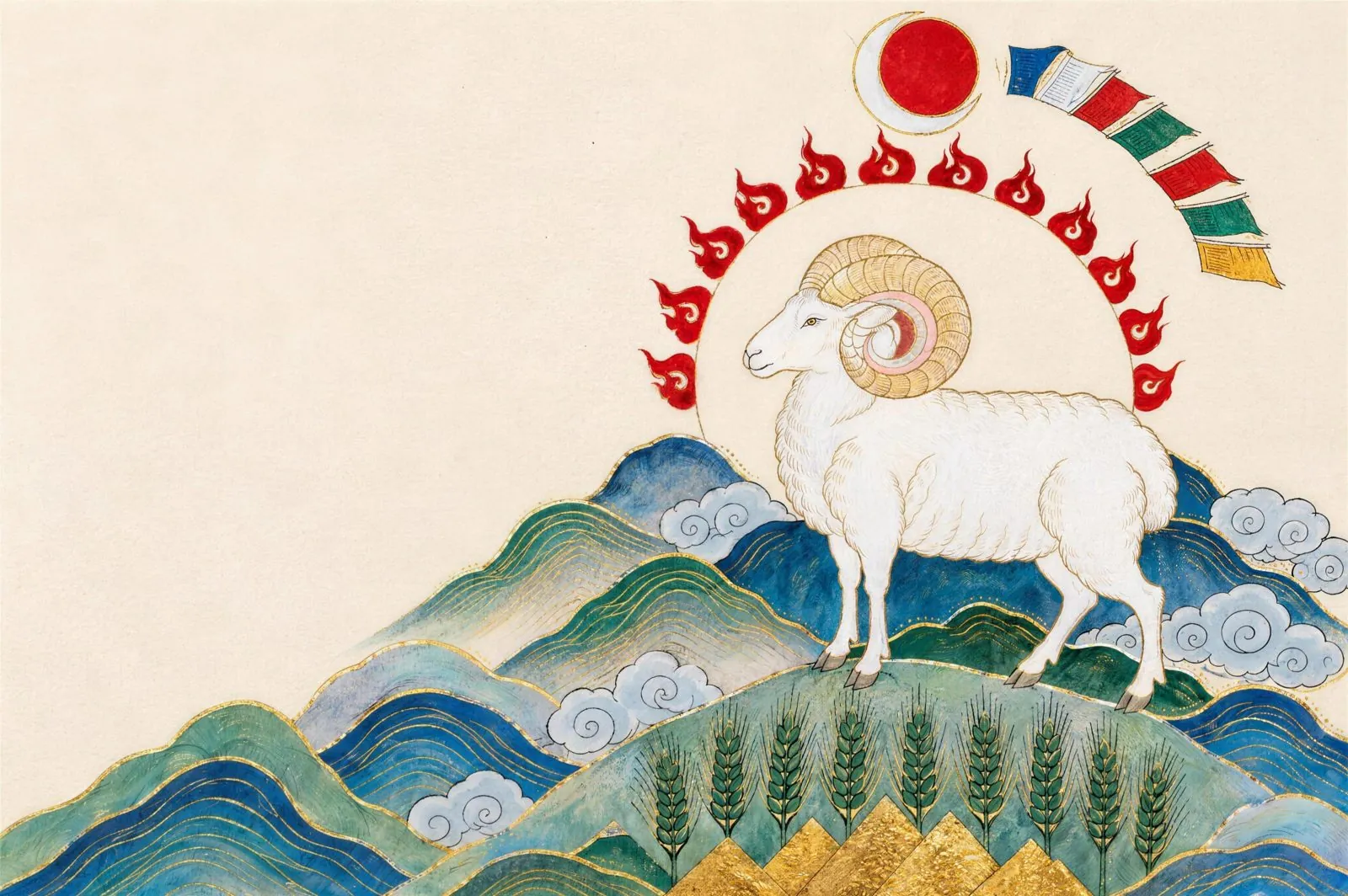
New Year
ལོ་གསར།
Losar
Tibetan New Year: families and communities celebrate for several days; the preceding days are for cleaning, offerings and preparing khapse.
The great days · Tibetan year
Six festivals carry the Tibetan year, from Losar to Ganden Ngamchö. Each one falls on the same lunar day every year, so the Western date moves with the moon.
Next great day…
Good days
The Tibetan almanac marks which days suit prayer flags, a wedding, a journey or a new house. Here you find the rules that are published and can be checked, worked out for every day.
Check a day
Prayer flags
Mondays, Fridays, the full moon and the new moon, when they are not a day to avoid.
Flags raised on the wrong days are said to bring obstacles for as long as they fly. The days to avoid: the 10th and 22nd of months 1, 5 and 9; the 7th and 19th of months 2, 6 and 10; the 4th, 16th and 28th of months 3, 7 and 11; the 1st, 13th and 25th of months 4, 8 and 12. Burnt days are left out too. Sources: FPMT, Explanations of Dharma Practice Days, prepared from the Men-Tsee-Khang calendar with advice from Lama Zopa Rinpoche; Lama Zopa Rinpoche, Prayer Flags and Auspicious Days. Best days: Benchen Karma Kamtsang, Hanging prayer flags.
The day we hang prayer flags is much less important than the motivation we have while doing it.
His Holiness the Dalai Lama and many great lamas, as taught at Benchen Karma Kamtsang
From the Men-Tsee-Khang almanac
These days are printed in the yearly almanac, the lo tho. They are being entered from the Men-Tsee-Khang almanac and checked page by page, so they appear here only when they are exact.
Burnt days: Sunday 12th, Monday 11th, Tuesday 10th, Wednesday 3rd, Thursday 6th, Friday 2nd, Saturday 7th. Source: Alexander Berzin, The Tibetan Almanac.
New Year
Tibetan New Year: families and communities celebrate for several days; the preceding days are for cleaning, offerings and preparing khapse.
Day of Miracles
Day of Miracles: marks the miracles of the Buddha at Shravasti; the last day of the Losar season.
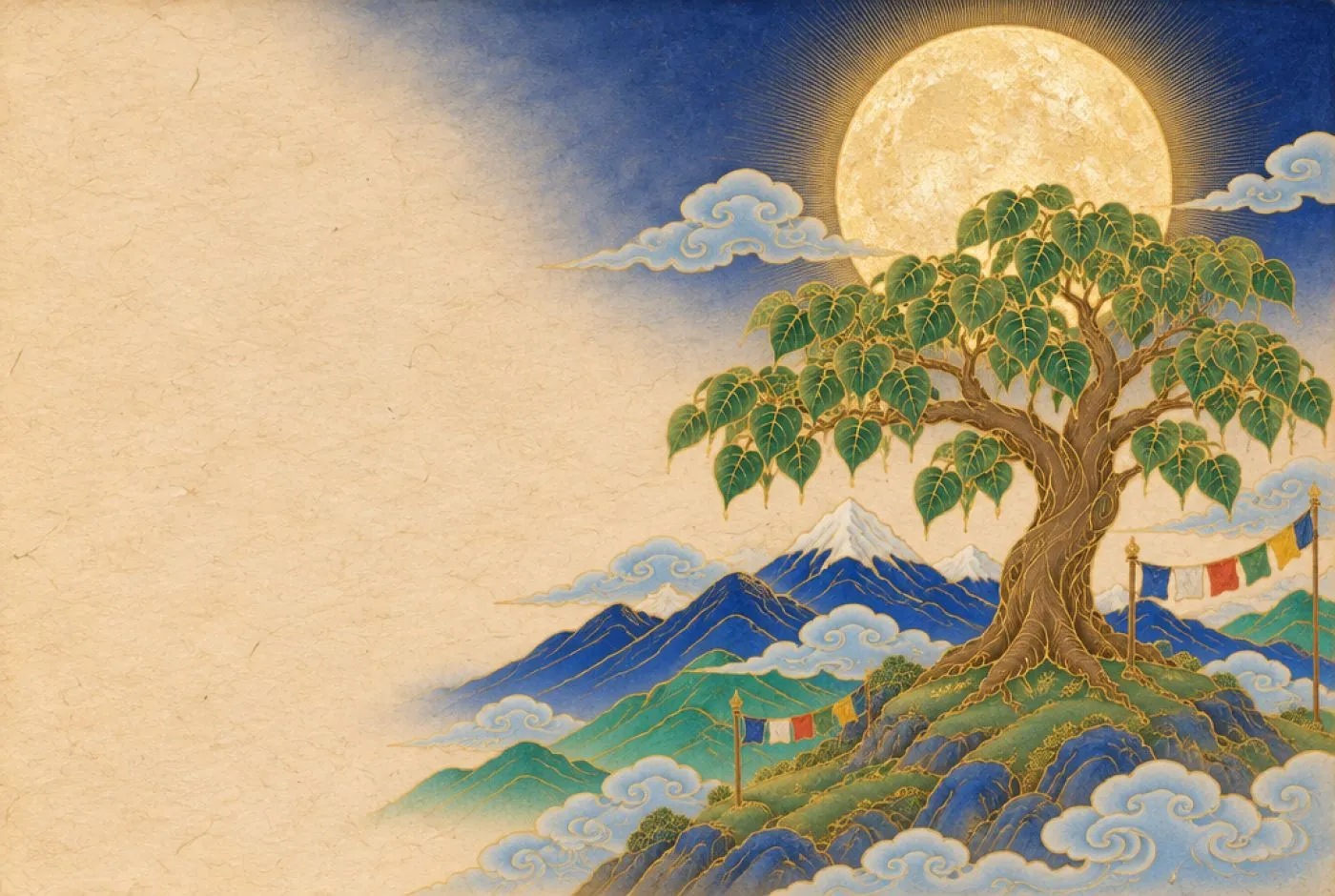
The holiest day
Commemorates the Buddha’s birth, enlightenment and passing into parinirvana; the holiest day of the year, in the holy month of Saka Dawa.
The first teaching
Marks the Buddha’s first teaching at Sarnath, the first “turning of the wheel of Dharma”.
Descent from heaven
Marks the Buddha’s descent from the heaven of the Thirty-Three, where he had taught his mother.
Remembering Tsongkhapa
Anniversary of the passing of Je Tsongkhapa; butter lamps are lit on rooftops and windows.
Days of remembrance
Remembering the 1959 uprising in Lhasa.
Born 1935.
Marking the first Tibetan parliament-in-exile in 1960.
Every month
A day for prayers and practices for health and healing.
Honours Padmasambhava, who helped establish Buddhism in Tibet in the 8th century.
A day for prayer and virtuous actions.
A day for tsok offerings and practice.
A day for prayer and reflection.
Tibetan calendar · key dates
Every date below is worked out with the Phugpa system, the one used by the Men-Tsee-Khang in Dharamsala. A Tibetan day starts at dawn.
Tibetan New Year: families and communities celebrate for several days; the preceding days are for cleaning, offerings and preparing khapse.
Day of Miracles: marks the miracles of the Buddha at Shravasti; the last day of the Losar season.
Remembering the 1959 uprising in Lhasa.
Commemorates the Buddha’s birth, enlightenment and passing into parinirvana; the holiest day of the year, in the holy month of Saka Dawa.
Born 1935.
Marks the Buddha’s first teaching at Sarnath, the first “turning of the wheel of Dharma”.
Marking the first Tibetan parliament-in-exile in 1960.
Marks the Buddha’s descent from the heaven of the Thirty-Three, where he had taught his mother.
Anniversary of the passing of Je Tsongkhapa; butter lamps are lit on rooftops and windows.
A day for prayers and practices for health and healing.
Honours Padmasambhava, who helped establish Buddhism in Tibet in the 8th century.
A day for prayer and virtuous actions.
A day for tsok offerings and practice.
A day for prayer and reflection.
Losar 2026 falls on Wednesday 18 February 2026, the 1st Tibetan month, day 1. Tibetan New Year: families and communities celebrate for several days; the preceding days are for cleaning, offerings and preparing khapse.
Saka Dawa Düchen 2026 falls on Sunday 31 May 2026, the 4th Tibetan month, day 15. Commemorates the Buddha’s birth, enlightenment and passing into parinirvana; the holiest day of the year, in the holy month of Saka Dawa.
Chökhor Düchen 2026 falls on Saturday 18 July 2026, the 6th Tibetan month, day 4. Marks the Buddha’s first teaching at Sarnath, the first “turning of the wheel of Dharma”.
Lhabab Düchen 2026 falls on Sunday 1 November 2026, the 9th Tibetan month, day 22. Marks the Buddha’s descent from the heaven of the Thirty-Three, where he had taught his mother.
Losar 2027 falls on Sunday 7 February 2027, the 1st Tibetan month, day 1. Tibetan New Year: families and communities celebrate for several days; the preceding days are for cleaning, offerings and preparing khapse.
Saka Dawa Düchen 2027 falls on Friday 18 June 2027, the 4th Tibetan month, day 15. Commemorates the Buddha’s birth, enlightenment and passing into parinirvana; the holiest day of the year, in the holy month of Saka Dawa.
Chökhor Düchen 2027 falls on Friday 6 August 2027, the 6th Tibetan month, day 4. Marks the Buddha’s first teaching at Sarnath, the first “turning of the wheel of Dharma”.
Lhabab Düchen 2027 falls on Saturday 20 November 2027, the 9th Tibetan month, day 22. Marks the Buddha’s descent from the heaven of the Thirty-Three, where he had taught his mother.
The Phugpa system, the one used by the Men-Tsee-Khang in Dharamsala. The dates are worked out on your phone or computer, so today's Tibetan date, the moon and the next holy day are always up to date.
Yes. Save it to your Home Screen once. After that it opens like an app and works offline; it updates itself when you are online again.
Eclipse days
Eclipse days are special days for practice: what you do on them is said to be multiplied. These are the next solar and lunar eclipses, and where they can be seen.
Dates from NASA’s eclipse tables, in Universal Time: in Asia and Australia an eclipse can fall on the next day.